
A BOTANICAL CORRECTION:
Ramps wild, Leeks Cultivated!
I came of age in Bradford, Pennsylvania, along the edge of the wild Allegheny National Forest, and many of those memories now sound to my Philadelphia friends as though I had grown up in Siberia or some other foreign land. I lived in Bradford from sixth grade to eleventh but almost all of my most colorful memories come from this time and place.
Believe it or not, every early spring, many of the inhabitants of the northern Pennsylvania oil town would get excited about a wild plant that would seasonally populate the forest floor. People of Bradford, and most likely the rest of Pennsyltucky, would roam the woods, hunting for what we all called leeks.
The patches appeared just as the snow retreated, broad green leaves pushing up through the damp forest floor. Often, aficionados would dig up the little white bulbs with pocketknives, brush the dirt off on their jeans, and eat them right there. Many many times a delinquent was sent home from school for eating them on the way in and sharing the undeniable odor with their entire class.
That might seem strange, but Bradford had its own ways… Many boys (and girls probably), myself included, brought in guns along with books and stowed them in our lockers so we could go hunting after school. The woods began only a short walk from the building, and no one thought much of it at the time.
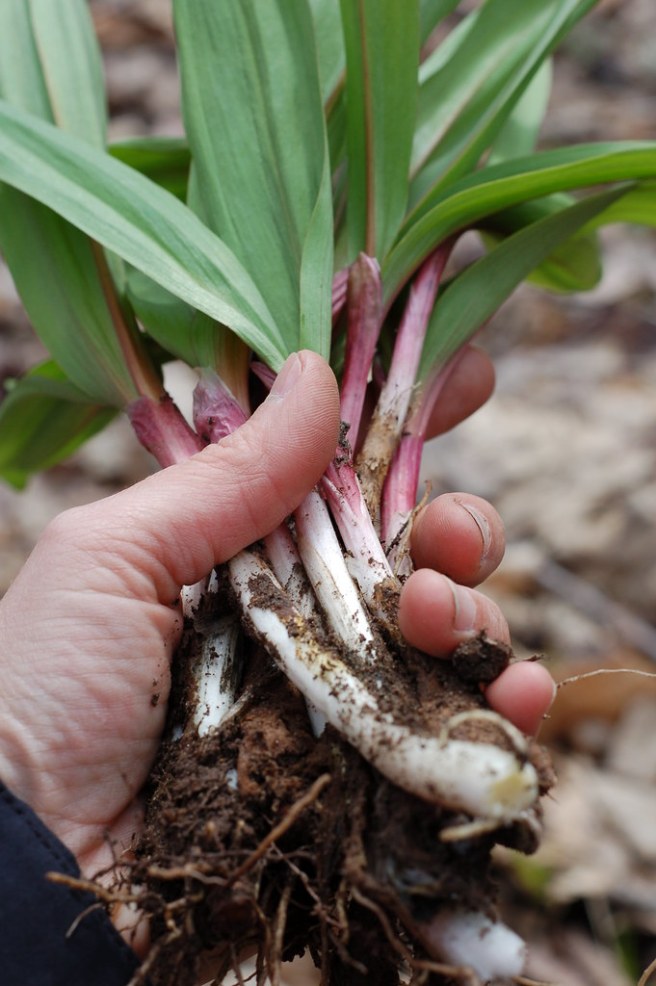
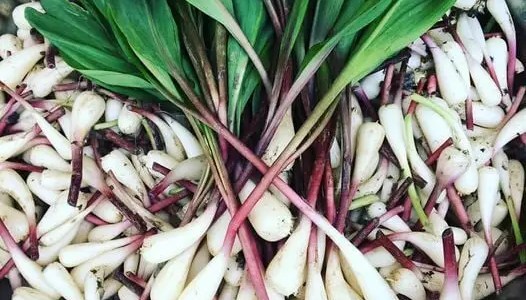
It took me nearly sixty years to learn that the plants we were digging were not leeks at all. They were ramps, a native woodland plant that appears for only a few short weeks each spring across the forests of Pennsylvania and Appalachia. The long cultivated leeks in the grocery store are something else entirely.
I learned bringing a gun to school was a bad idea long before I learned that those weren’t leeks, which was today!
I still keep in touch with some Bradfordians, and people there still call the plants leeks. But as we ramp up Sans Souci, so to speak, I’ve learned something surprising. True leeks are a cultivated vegetable in the onion family, closely related to onions and garlic. They’re mild, refined, and a staple of European cooking. Ramps, on the other hand, are a wild woodland plant that grows naturally in Appalachian forests, including parts of Pennsylvania. People of PA, you are picking ramps!
I would have lost a big bet.
For years I thought it was the other way around. I assumed ramps were the chef’s delicacy and leeks were the wild plant. I would have sworn I was correct in this assumption but…
Research says otherwise. Leeks are the gentle diplomat of the onion world, adding depth and complexity without raising their voice. Ramps are the punk rock cousin. Loud flavor, cult following, and they show up for a brief spring tour before vanishing back into the woods.
That brief appearance is part of the story… ramps grow very slowly. A seed can take more than a year to germinate and several more to mature, which means a patch can take years to recover if it is overharvested. For generations they were simply local food across Appalachia, but in the last few decades renown chefs have featured them and demand exploded. Suddenly foragers were combing forests to supply restaurant kitchens during a season that lasts only a few weeks.
The result is that ramps developed a strange new reputation. In some places they nearly disappeared from heavy harvesting, while in others they are treated with almost truffle-like reverence each April, the first wild green signaling the end of winter.
Still, in Bradford they remain what they always were: leeks. And around Chester County and throughout Appalachia they carry a whole cultural halo. Spring ramp festivals pop up across Pennsylvania and West Virginia. Foragers guard their patches like treasure maps. The plant may have acquired a fashionable new name, but the woods have been quietly growing it the same way all along.
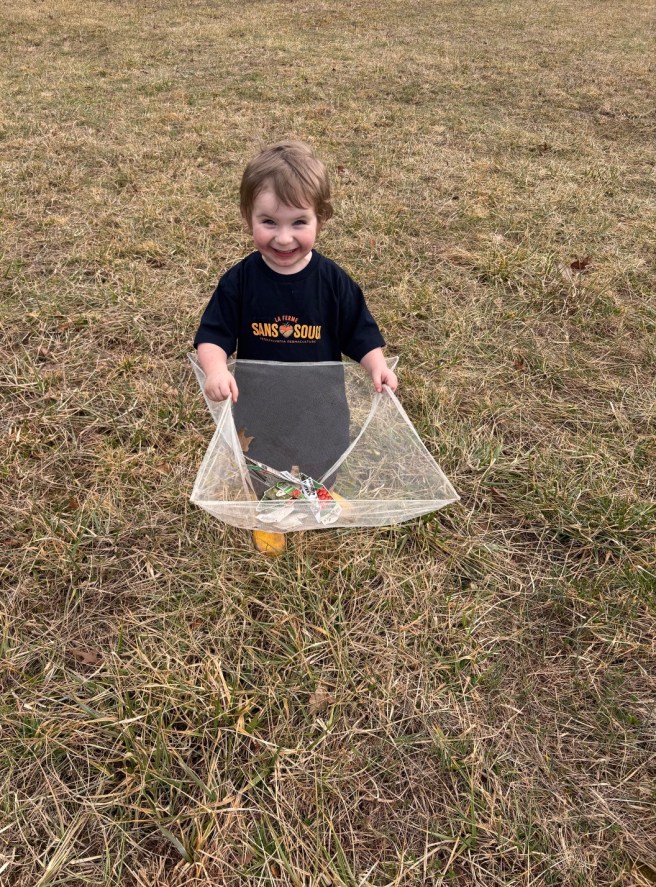
So excited we wet our plants…
This past week (still early March) we were blessed with two days over 70º and we got excited to get out into the fields! We have been checking on all of the fall trees planted throughout the winter and, if nothing else, they are keeping the local herd of whitetail from starving. And we had started annual seeds in a grow room in the barn but we really couldn’t wait to work outside on the farm.
On the first warm day, we only worked a halfday and I went home to use Matt’s Kabota. I reclaimed a small portion of land by pushing back some of the wild mess of junk trees, prickers, briars, redwood and vines that slowly encroach. The ground was very soft so repairing it is a new item to add our TO DO list but it’s a start that probably would have been wiser to do in autumn. For one, new growth would hide the mess that the tractor makes but, more importantly, we wouldn’t be disturbing any spring habitats.
On the second day, we planted two varieties of potatoes in the footprint I had dug out for the greenhouse. We decided not to move the greenhouse and instead used the 6” cut out to place cut Irish Cobbler and Red Viking potatoes procured online from Hoss. After spacing the pieces in two sections I covered the entire 10’ x 14’ with a healthy layer of the black compost we recently relocated from the annual garden. It is also on my list to rebuild the large composting station with three bays to keep material advancing through stages.
So it seems, a lot like owning an old home, every task started yields several more tasks to complete.
The weather is turning and this weekend we are putting some trees in the ground and moving seedlings to the greenhouse but all of that should be its own entry!
STAY CURIOUS
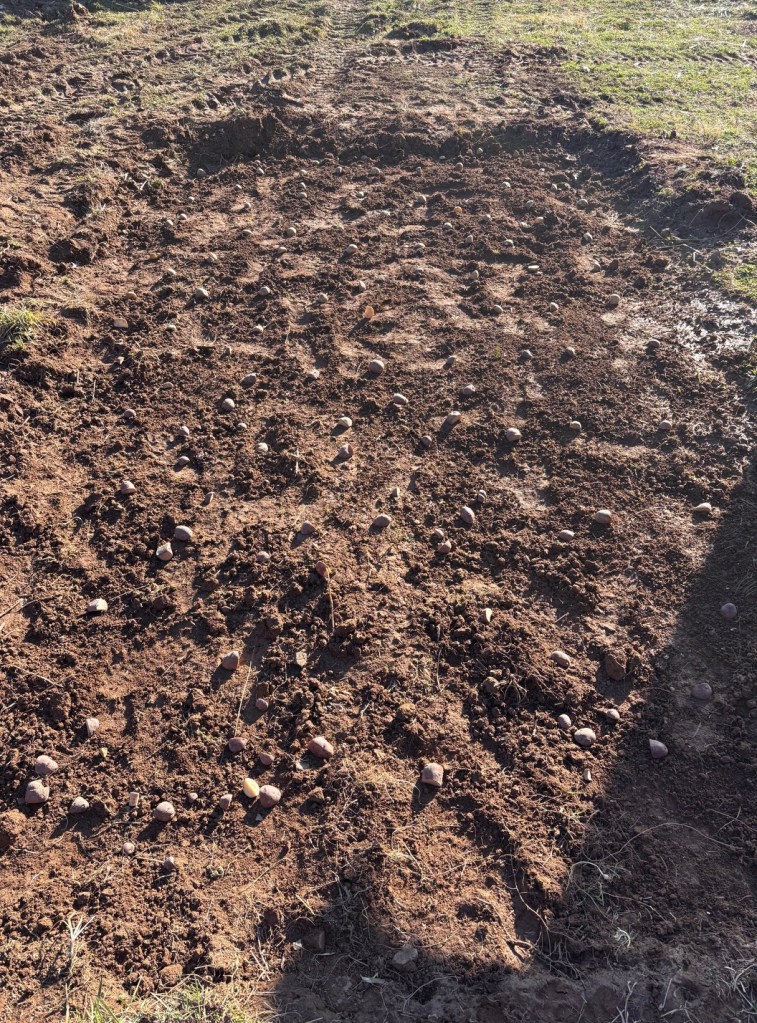
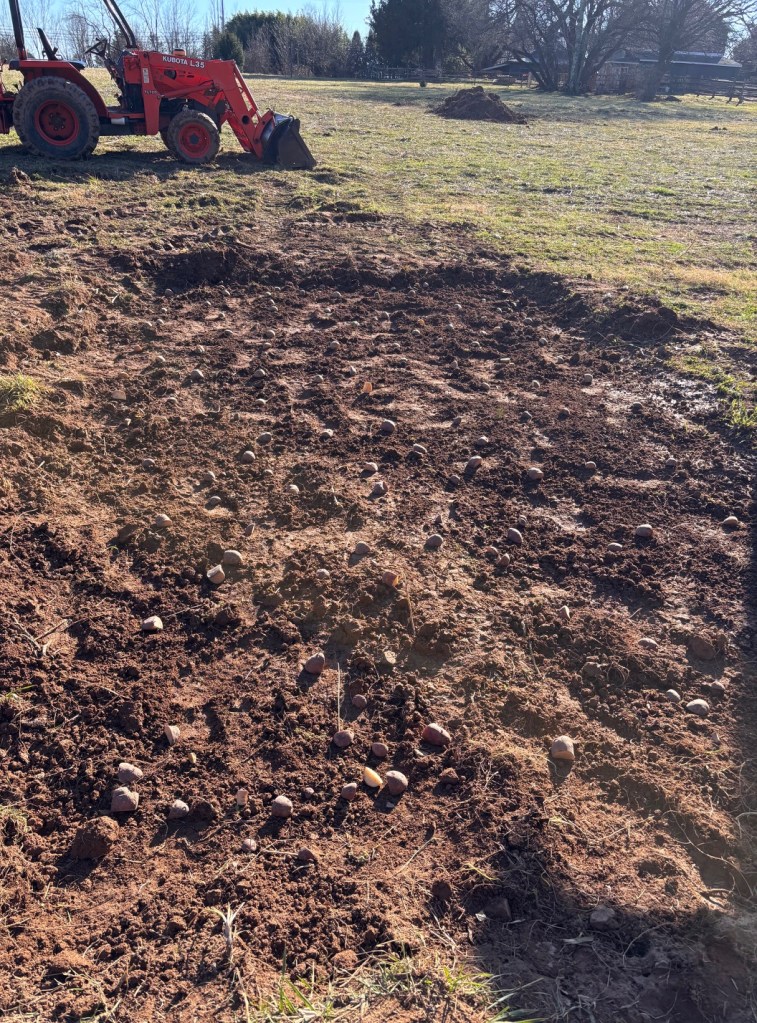
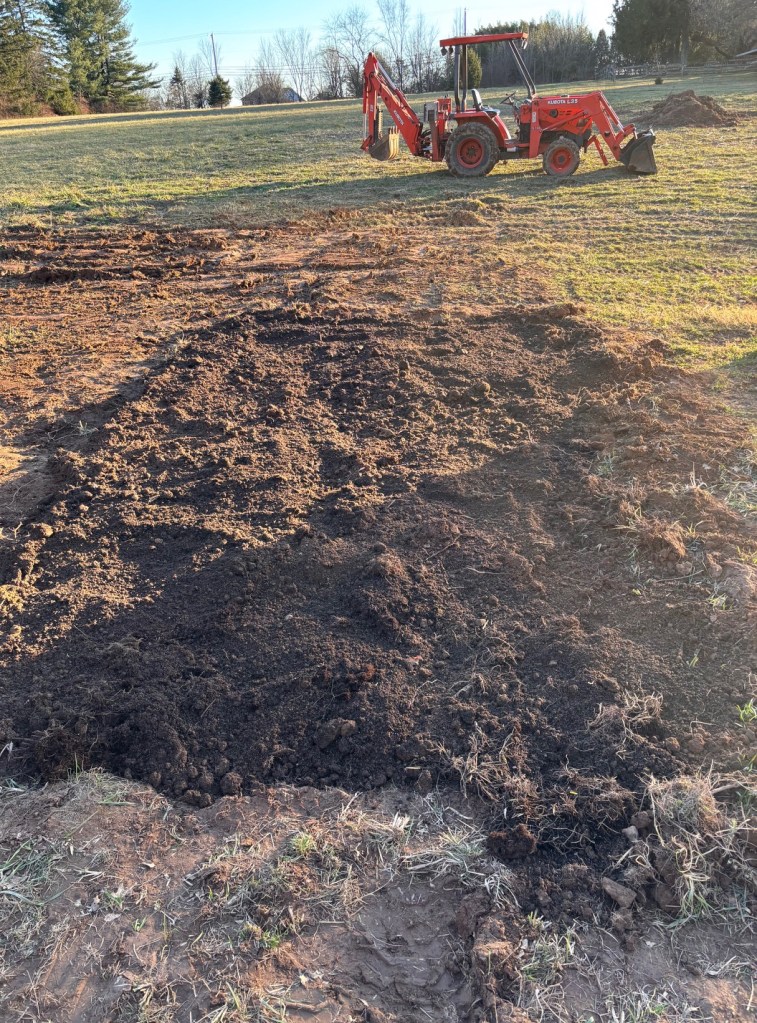
We’re just excited to be in the Agrihood! Potatoes are in the ground.

 PALM READER