
“I believe a leaf of grass is no less than the journey-work of the stars”
— Walt Whitman
We’ve hit the one-year mark since we first decided to transform our empty acreage and hard clay fields into a useful community agrihood.
In 2026, we expanded our annual gardens and installed 100+ fruit trees and companion plants in the first zone. We experimented with bees, a field of corn, and sunflowers. Figs, pumpkins, and marigolds all exceeded expectations, while peaches, apples, and pears need more time.
The biggest lesson learned this year is that farming is timing. Everything must be done at the right time. Don’t be late, or it will DIE!
Farmers have known this since before Ecclesiastes 3:2 was first drafted. Everything has a season, including mechanical repair. This year, I fixed mowers and tractors, rigged trellises, and did at least as much repair as digging in the dirt.
Nearly everyone has asked what we’ll do with all the bounty, and two organizations have made serious overtures about bringing Sans Souci to a farmers market. We’re not there yet. That will take time, additional resources, and funding…
So, without a lot of fanfare, the first growing season here is nearly complete. There are still dozens of pumpkins out in the field getting fat, but things are noticeably winding down.
What I’m most proud of is the evidence that the land is regenerating. Not only where we’ve worked hard to transform, but throughout the property where we’re helping it along.
. . .
When I say these fields were inhospitable to productive growth, I’m not exaggerating. For more than 40 years, hay was cut and removed. Rain fell and washed away topsoil for four decades, until what remained was hard, unyielding clay.
Throughout this season, we’ve worked to regenerate the land, including spreading compost wherever we can. As the farm calendar flips, we’ll keep improving the soil and figuring out which plants do well here and give something back to the land.
The 2026 annual garden produced at least twice the variety of years past, and Lori has canned sauces and pickles. The orchard has produced sporadically… handfuls of dill, mint, and lavender, and very few pieces of edible fruit. But “it’s an establishment year,” I tell myself.
. . .
One of the main challenges is working full time while trying to get a small farm enterprise going.
I really want to use the next field zone to go big on annuals: rows of potatoes, carrots, tomatoes, and other vegetables, with hoop houses to extend the season. But that takes more time than a weekend can offer. Lori officially retired this year, so we’ll at least have another pair of hands in the garden for most of next season.
. . .
This wasn’t meant to be a seasonal wrap-up—that will come as we plan seed planting and figure out how to winterize the more fragile plants in the ground—as much as it was to be a tribute to a plant of singular distinction.
My friend José explained it to me when we discovered the plant together: “Plants that you didn’t plant grow strong because they grow on their own.”
Volunteer plants have something going for them. Without our help, they’ve found enough soil, sunlight, and water to survive and thrive. We spend all this time deciding what to plant and where, and then something shows up on its own and outdoes us.
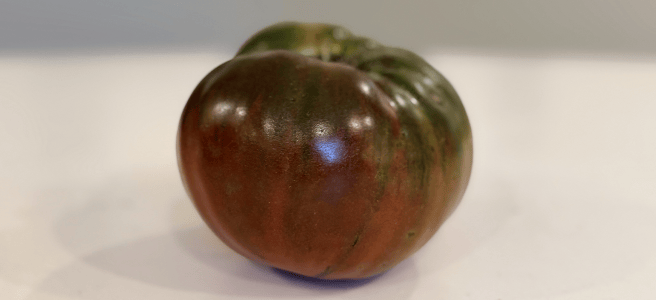
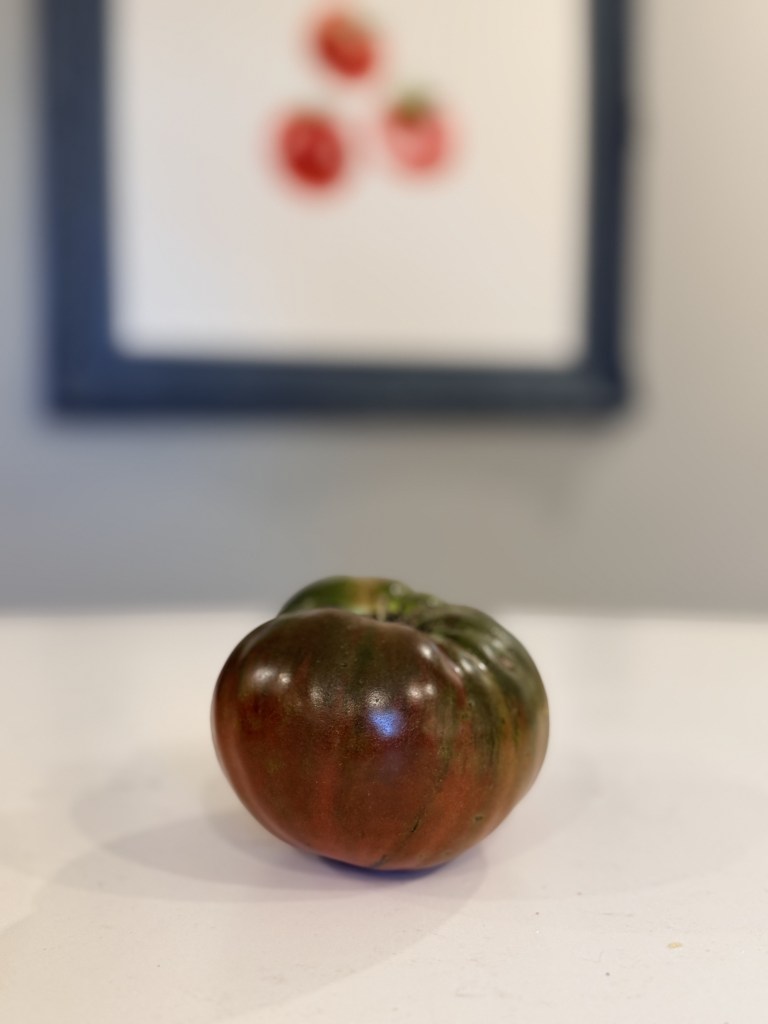
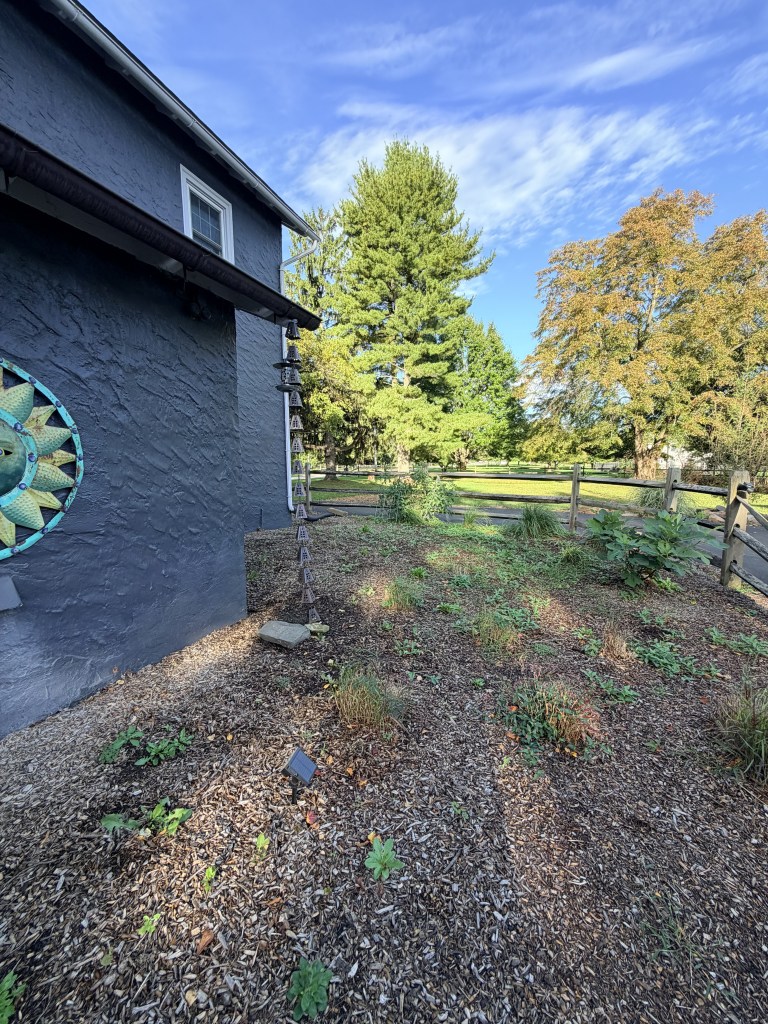
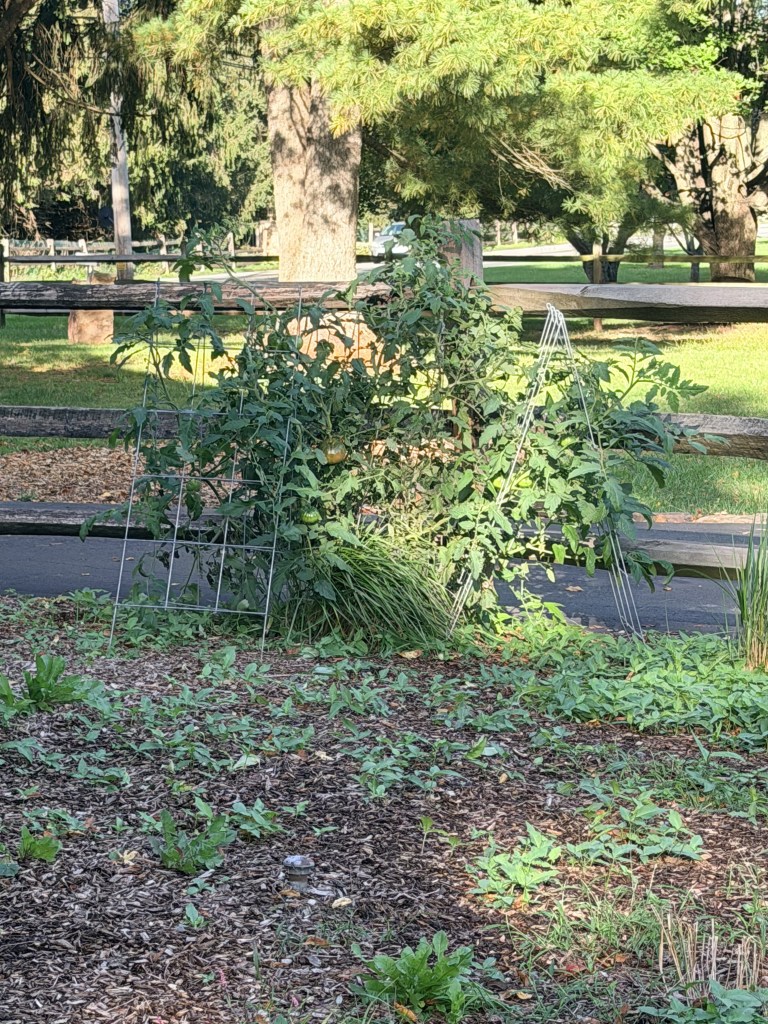
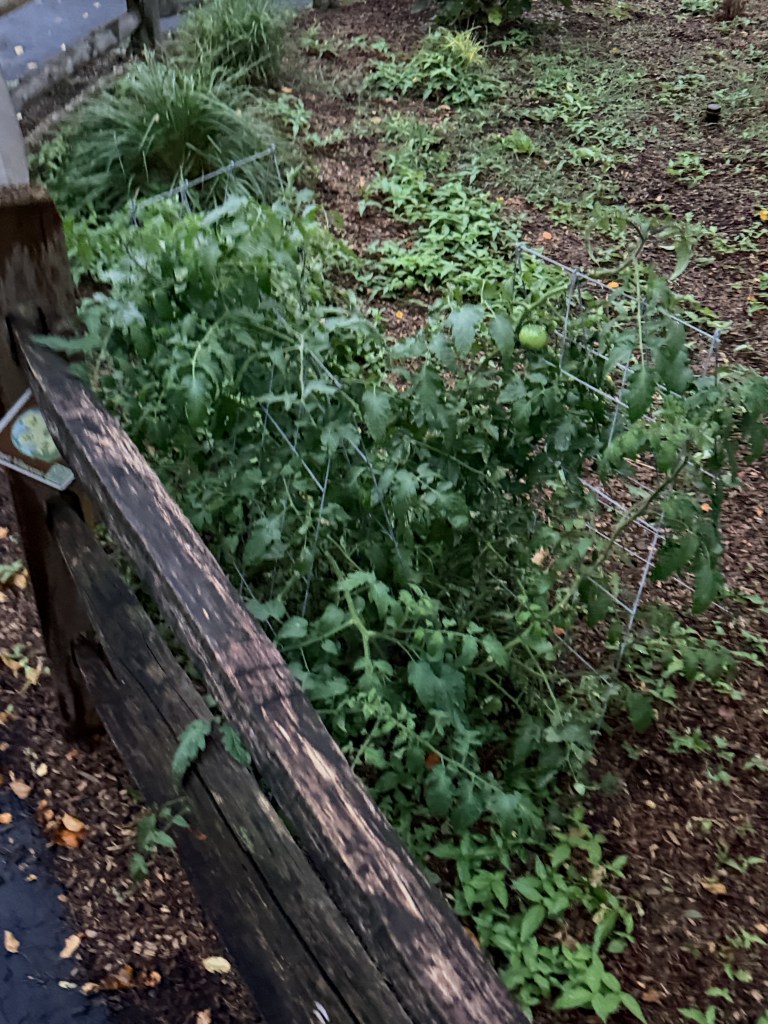
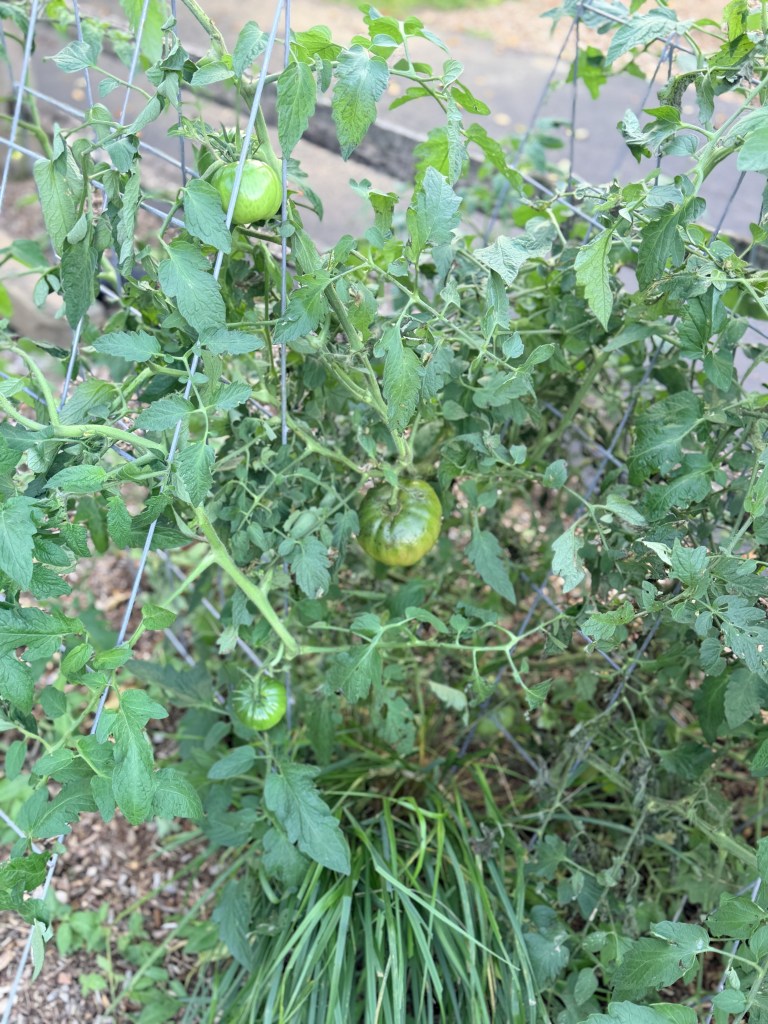
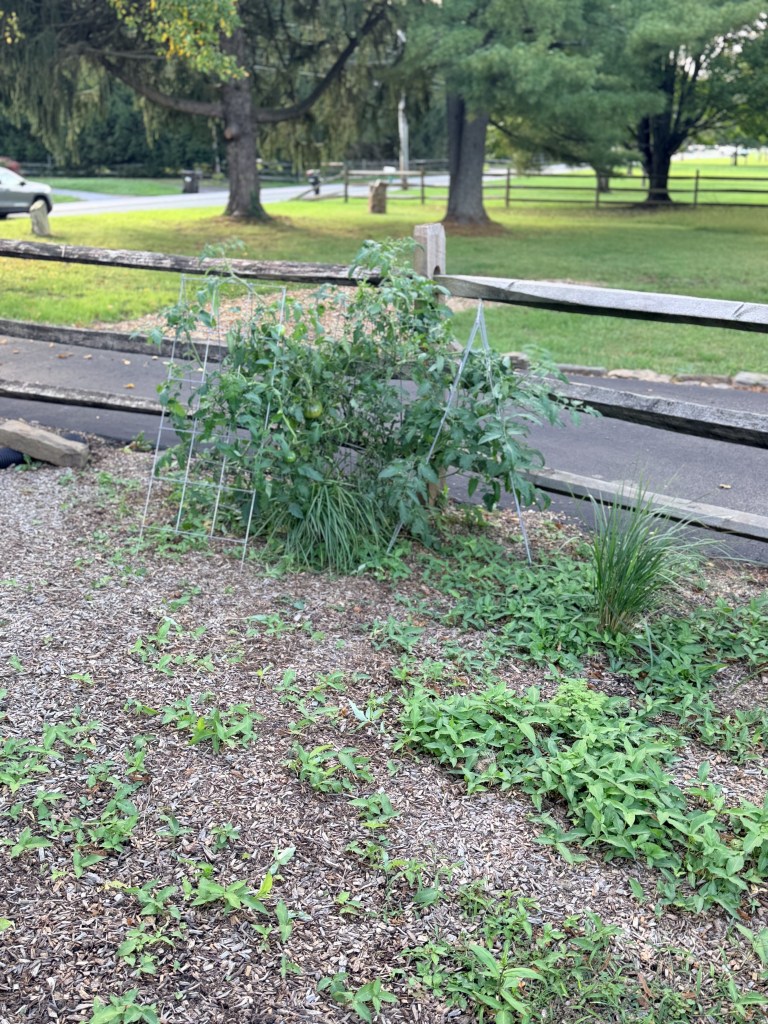
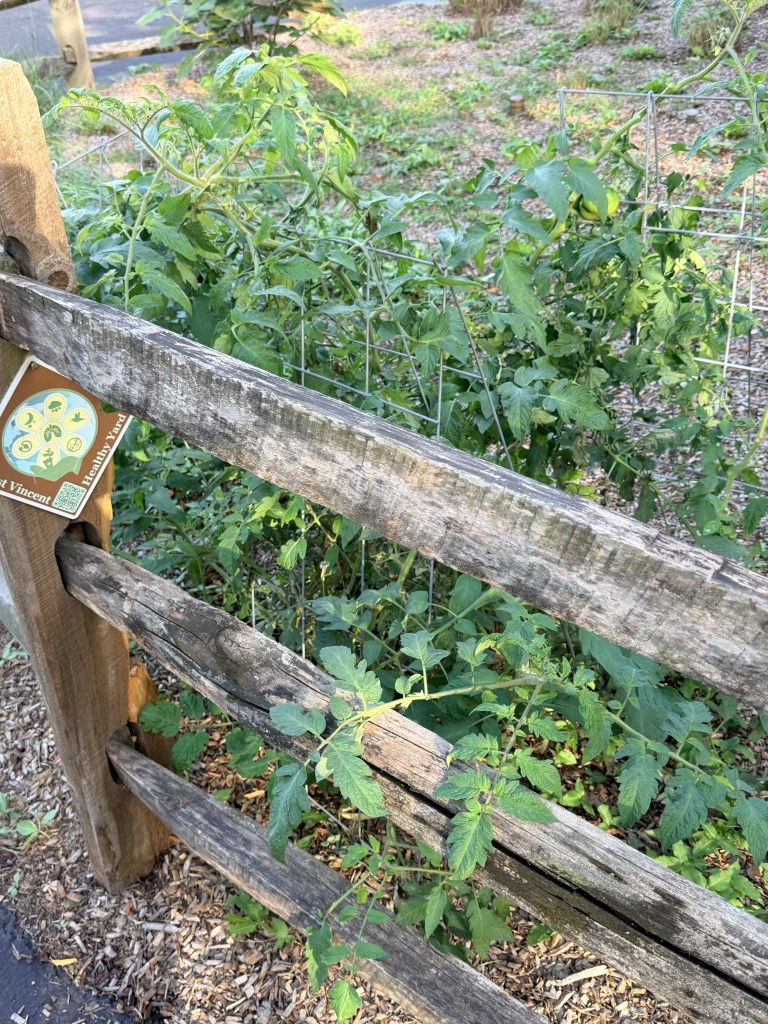
The plant I want to highlight is a late-coming tomato we discovered next to our driveway, a good 50 yards from the garden and several hundred yards from the compost. How the seeds got there in the first place is a mystery. But just today, after I’d already started this tribute, we were given a clue.
The tomato is growing in one of the beds around the house, an area we usually weed regularly. This year, with all the other work we’d taken on, we didn’t have as much time to weed. So it had a chance… and that’s all it needed!
We didn’t even notice it until later in the season, well after several tomato harvests in the garden, because it was surrounded by so many weeds. Once we cleared around it, the plant became supercharged and started fruiting. We never pruned it, but we’ve harvested the largest fruit of the season from this massive plant.
Whatever variety this driveway warrior is, the tomatoes don’t become fully red, but they’re great for slicing and eating. And unlike most of the plants in the annual kitchen garden, this one is still producing into October.
This plant has inspired me for months and is the reason for this post. We have volunteer plants all the time at Sans Souci (that’s what most weeds are and we’ll always get pumpkins, melongs, flowers and even tomatoes growing around the compost) but never one so impressively prolific.
After witnessing this king of tomatoes, a plant of which Darwin would beam with pride, you have to wonder: Why don’t we see tomatoes growing wild?
. . .
Oh, how do we think the plant got there? Seeds can be carried by birds, wind, and other animals. But today, after I paused writing this to meet our friends for breakfast, we came home to see a squirrel running from the plant with a freshly picked tomato!
The little thief sprinted away with the fruit as we pulled into the driveway. We still don’t know how the original seed got there, but I’m starting to have an idea.
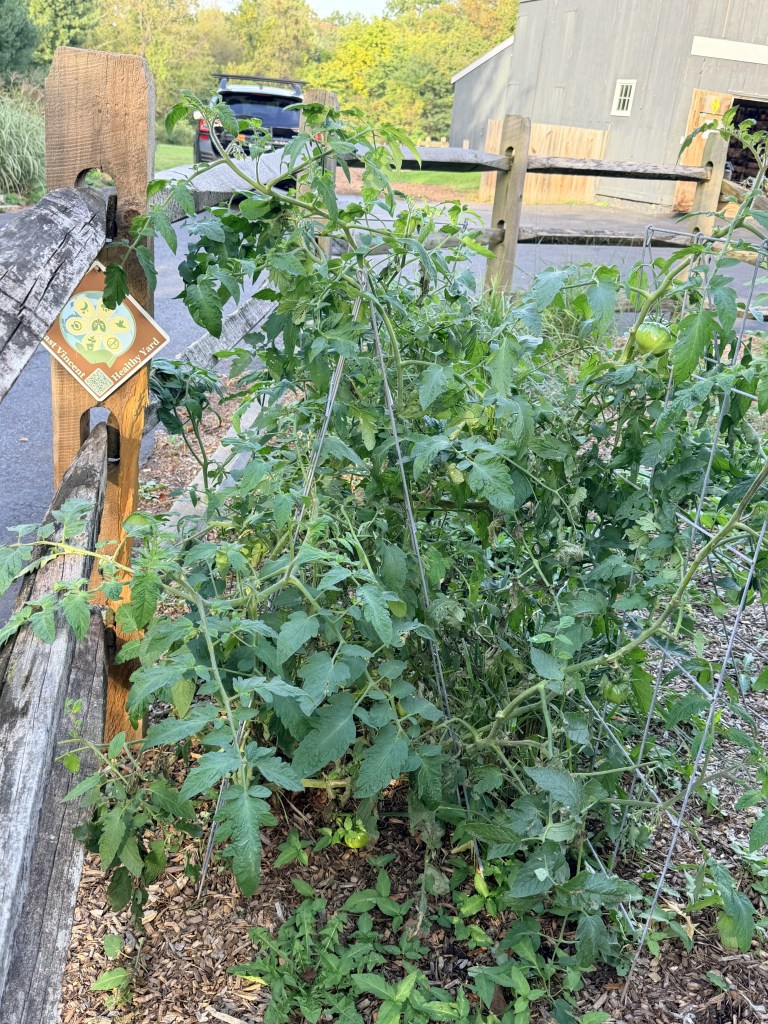
I’m always in favor of giving an overlooked plant, person, or group dignity and significance.
Nobody planted this tomato. We nearly weeded it out without knowing what it was. Now it’s October, and it’s still feeding us.
And, apparently, the squirrels.
STAY CURIOUS.


